What the programme involves
The Porsche Carrera Cup Benelux is a one-make series: every car on the grid is an identical Porsche 911 GT3 Cup, with the same engine, the same tyres and the same regulations. That makes it one of the cleanest reference frames in motorsport. There is no technical advantage to buy and no aero package hiding half a second.
For a driver that is attractive and uncomfortable at once. Attractive, because a result in a one-make series reads directly: whoever is at the front earned it on track. Uncomfortable, because there are no excuses. NiceRacing chose that environment deliberately — one programme, one class, and no second project pulling attention away from race weekends.
The season runs to six rounds across Belgian and Dutch circuits plus European support rounds. The Benelux rounds are held at Circuit de Spa-Francorchamps, Circuit Zandvoort, TT Circuit Assen and Circuit Zolder. The two European rounds are filled in once Porsche Motorsport publishes the final calendar.
The two available seats
NiceRacing runs two cars in 2027 and has no drivers signed. Both places are being filled conversation by conversation, with a preference for drivers who want the full season and see the programme as a multi-year step rather than a one-off experience.
| Seat | Profile | Objective |
|---|---|---|
| Car 29 — Pro | Demonstrable circuit racing experience, international licence, available for the full test programme | Contending for the overall title |
| Car 28 — Pro-Am | Gentleman driver or stepping-up talent, licence route may still be in progress | Pro-Am classification, a building season |
The split is not a ranking. A Pro-Am entry with a thorough test programme often produces more driver gain than a Pro seat taken over mid-season. In the intake meeting we establish together which seat fits your experience, availability and budget.
Licence requirements
An international licence is required. In the Netherlands it is issued by the KNAF, in Belgium by RACB. Drivers without one first complete the national route: theory, a medical, and a demonstrable number of supervised circuit kilometres.
- Apply for a national licence with your own federation, including the medical.
- Complete instruction and test days to evidence the required experience.
- Upgrade to an international licence, generally after a number of valid race starts.
- Register with the series, together with the team, well before the first round.
NiceRacing guides that process and schedules the mileage. Worth knowing: the licence is rarely the bottleneck. The real preparation is seat fit, pedal position, brake confidence and learning to read data. Drivers who invest there arrive far better prepared than those who only complete the paperwork.
The best way in is a test day before the final decision. You drive the car, see how the team works, and then receive a substantiated budget instead of an assumption. Request that test day through the form below.
From track day to starting grid: the test programme
The jump from a fast road car to a 911 GT3 Cup is large. Not so much in power — 510 hp is manageable — but in brake confidence, sequential shifting and how slick tyres behave inside their working window. Drivers mostly underestimate how much cornering speed a GT3 Cup carries and how late it can be braked.
- Phase 1 — bedding in. Seat, pedals, wheel and sightlines set up. Calm laps with fixed reference points, aimed at consistency rather than lap time.
- Phase 2 — braking and tyre window. Moving brake points, reading temperatures and pressures, first data comparison against a reference driver.
- Phase 3 — qualifying simulation. One lap when it counts, with traffic and a time limit. This is where seasons are made.
- Phase 4 — race simulation. Start procedure, opening lap, wheel-to-wheel running, pit regulations and managing tyres over full race distance.
Each phase closes with a debrief in which data, video and the engineer's read sit side by side — the same method NiceRacing used across six seasons in the Ford Fiesta Sprint Cup Benelux and sharpened further with EJ Automotive.
Budget: how a season is built up
A season in a GT3 one-make series requires a realistic budget. NiceRacing works with one season budget per car, built from fixed items, so it is clear up front what is included. The specification is supplied on request; no figures appear on this page because entry fees and tyre prices are set per season.
| Item | What it covers |
|---|---|
| Entry | Season registration with the series, licence and administration |
| Car and engineering | Running the 911 GT3 Cup, race engineer, mechanics, preparation between rounds |
| Tyres and fuel | Tyre allocation per weekend, fuel, consumables |
| Test days | Pre-season test and circuit-specific test days per the chosen programme |
| Logistics | Transport, paddock space, team wear, hospitality unit |
| Damage | Deductible and damage cover, agreed in advance |
A partial programme is possible. The four Benelux rounds form a logical package for drivers limiting travel, and a second driver in the same car lowers the cost per person. What we do not do is keep a budget low by cutting test mileage — that is the first thing that makes a season fail.
Bringing sponsors to the team
Many drivers fund part of a season with their own partners. NiceRacing treats that as part of the programme, not a side matter. Drivers who bring partners get space on the car, on team wear and in the hospitality unit, plus the material to justify the spend: livery proposals, media reporting per race weekend and guest places at every round.
The full structure of partner packages is on motorsport sponsorship. To bring business guests to a race weekend, start at business hospitality.
Why NiceRacing
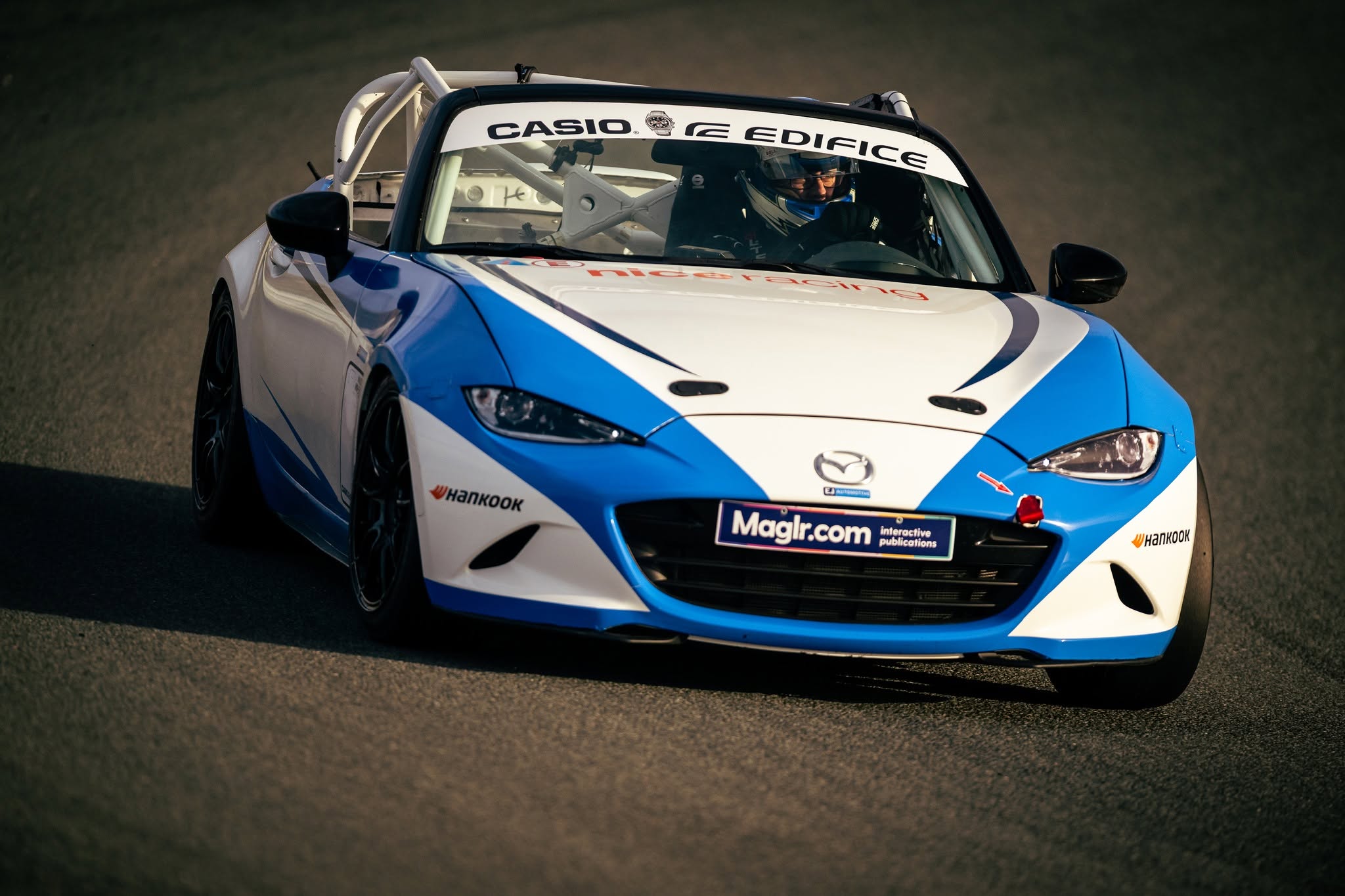
NiceRacing has raced in the Benelux since 2013, starting in Formula Ford, then six seasons in the Ford Fiesta Sprint Cup Benelux from 2019 to 2025, stepping up to GT3 machinery in 2027. Cooperation with EJ Automotive began in 2013 and grew from 2019 into full technical cooperation, netting podiums and a race win at Assen.
For a driver that means two things. The people beside the car have done this before, in a class where the difference was also measured in tenths. And the team has no second programme competing for attention: every hour in the workshop and every test lap goes to the same two cars.
Frequently asked questions
What licence do I need to race in the Porsche Carrera Cup Benelux?
An international licence is required, issued in the Netherlands by the KNAF and in Belgium by RACB. Drivers without one first complete their national federation's licence route and then build mileage on test days. NiceRacing guides that process and schedules the required kilometres.
Do I need racing experience for a seat at NiceRacing?
The Pro seat requires demonstrable circuit racing experience. The Pro-Am seat is open to gentleman drivers coming from another class or stepping up from track days, provided they complete a test programme before the season starts.
What does a season in the Porsche Carrera Cup Benelux cost?
A season budget covers entry, car and engineering, tyres and fuel, transport and hospitality, plus damage cover. NiceRacing works with one season budget per car and supplies it as a specification at the intake meeting, so it is clear up front what is included and what is not.
Can I race part of the season?
Yes. Alongside a full six-round season a partial programme is possible, for example the Benelux rounds at Spa-Francorchamps, Zandvoort, Assen and Zolder. A second driver sharing the same car is also open for discussion.
Can I bring my own sponsors to the team?
Drivers who bring partners receive space on the car, on team wear and in the hospitality unit. NiceRacing supplies the activation material: livery proposals, media reports per race weekend and guest places at every round.